Case Study 03 · Consumer Marketplace · 2018

Atom Tickets

A 13‑month, ground‑up redesign of the movie‑ticketing app — rebuilt to fix retention and convert the audience it was already winning.

Role
Senior Product Designer
Led the redesign
Timeline
13 months, end to end
Platform
iOS & Android
Team
Two design peers · reported to CPO
01 — Context
Where the product
stood when I joined

A well‑funded launch with a distinctive product — and early signs of trouble.

Atom Tickets was Lionsgate and Fox Entertainment Group's answer to Fandango — a mobile‑first movie‑ticketing marketplace built around a distinctive "Wheel" interface the founding team was proud of.

That summer the app left its Tennessee pilot and began nationwide coverage, backed by a "first ticket free" promotion in July. By September, several areas of severe underperformance had been detected. I joined in mid‑October to lead the response.

02 — Problem
Three failures
under the growth

Strong new‑user growth was masking weak retention, fraud, and dead features.

  1. Retention and engagement lagged growthNew‑user acquisition was healthy, but low conversion and poor 30‑day retention showed the app wasn't holding the audience it won.
  2. The free‑ticket promo was being gamedHigh instances of fraud — throw‑away email addresses used to claim "first ticket free" over and over — inflated numbers and drained margin.
  3. Flagship features went unusedThe headline capabilities — buying concessions and social planning — were essentially untouched by real users.
03 — Objectives
What success
had to look like

Targets calibrated to the business's lifetime‑value model.

  1. Hold the acquisition engineMaintain a healthy organic new‑user rate while fixing what happened after install.
  2. Multiply retentionDrive 2× D7 and 3× D30 retention, calibrated to the LTV target.
  3. Lift repeat conversion by 20%Turn first‑time buyers into repeat ticket purchases.
  4. Generate signal for partnersProduce attention and interest data valuable to studio and exhibitor partners.
04 — Process
How the work
was run

From root‑cause research to every shipped screen.

I led the process end to end — researching and hypothesizing on root causes, then proposing behavioral objectives that product bought into before a single screen was designed.

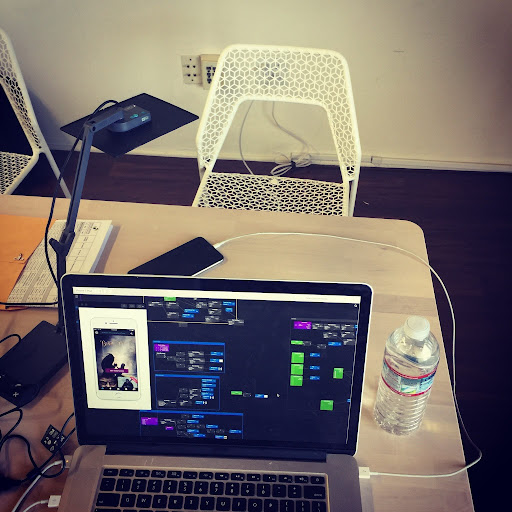
Checkout with Friends was the riskiest addition: letting one buyer purchase and allocate tickets on behalf of friends joining them, a more complex flow than a standard single-ticket purchase. Before it shipped, I built a clickable iPhone prototype and ran guerrilla usability tests in public, approaching people already in line to buy movie tickets and recording each session. That testing validated the underlying approach but surfaced specific friction in the affordances and microcopy, which I refined before launch.

01
Design strategy
02
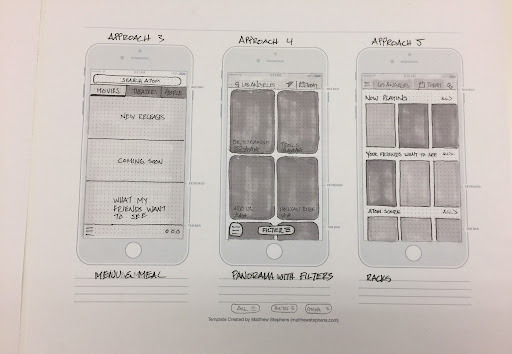
Explore scope & interaction approaches
03
Prototype, investigate, validate
04
Sequence strategic feature roll‑out
05
Design every screen & element
06
Support engineering, refine & iterate
Stakeholders
CEOCPOLead PMHead of EngineeringiOS & Android EngDir. Customer ServiceHead of Marketing
05 — Outcome

A fully redesigned app on iOS and Android — and the numbers to prove it worked.

+18.25%
Increase in checkouts, first quarter (absolute)
+111%
Increase in trailer views
+3.75%
Increase in accounts created
+3.13%
Increase in order size
4.9 ★
Average rating
99.3k
Ratings to date
Redesigned home screen
Home & discovery
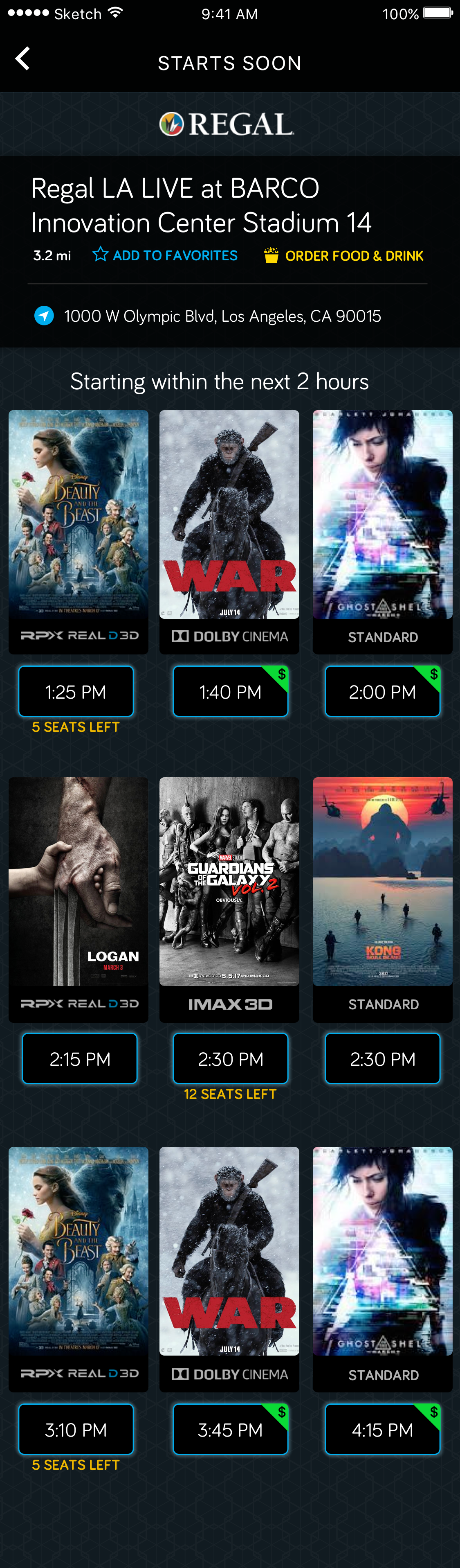
Redesigned theater showtimes screen
Theater showtimes
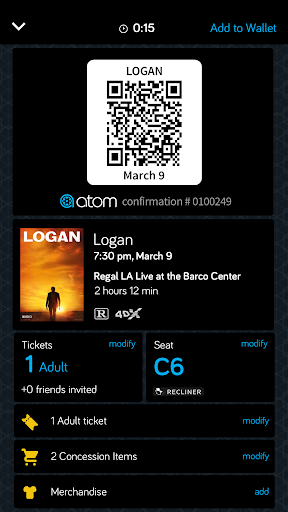
Redesigned ticket and confirmation screen
Ticket & confirmation
What Shipped
Browse by Movies or TheatersTrailer drops & WishlistCheckout with friendsOptimized checkout & ticketing