The Lab · AI‑Native Product · 2026

Green Days

A farmers‑market app that shows what's actually in season near you, then turns your real basket into one confident recipe — concept to a live product across 14 European markets in five days, one designer directing the whole AI‑native stack.

Try it live ↗ — lab.ryantnance.com/greendays
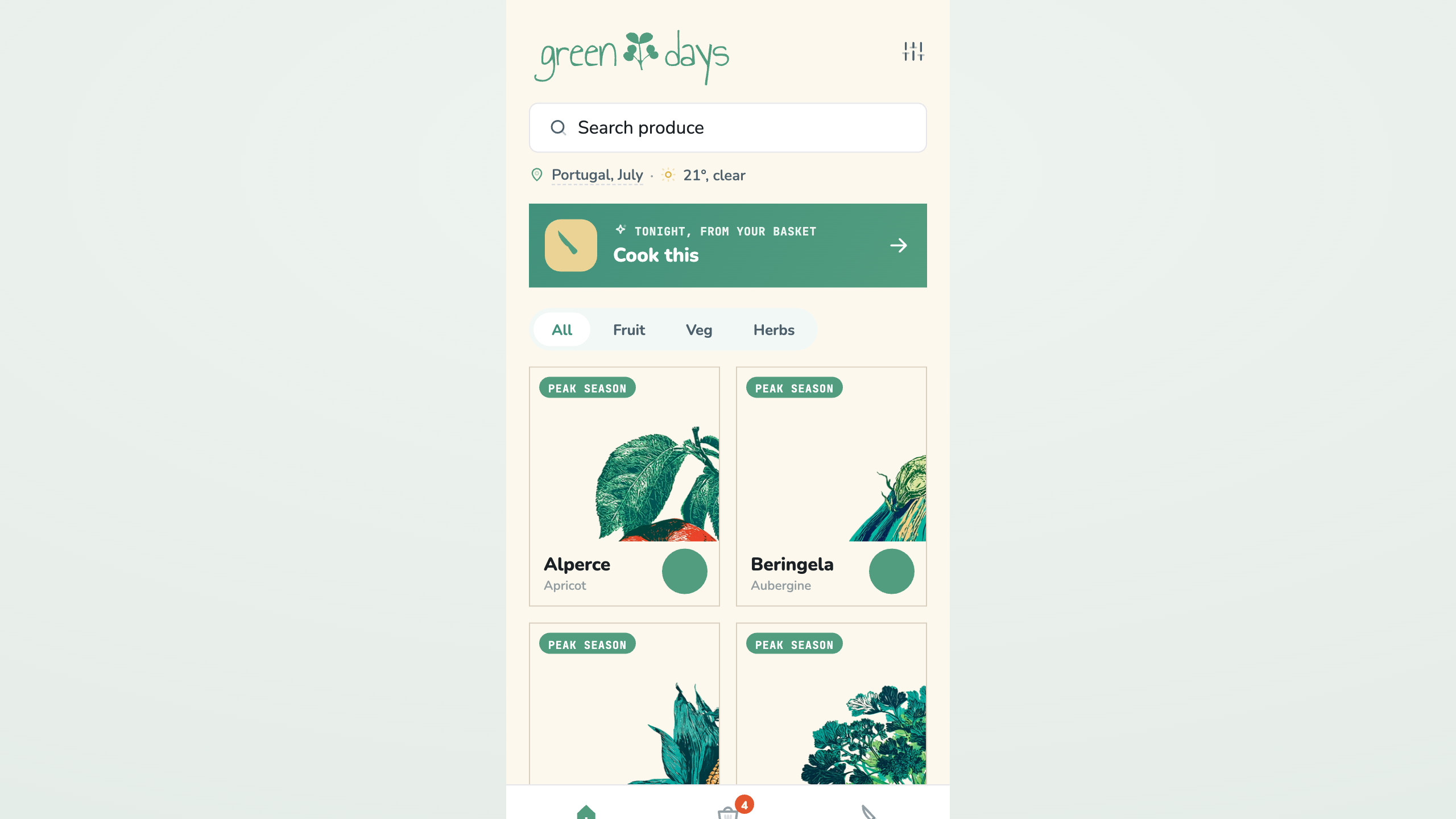
Green Days home screen — search, Portugal in July, and tonight's Cook This pick
Role
Designer & Builder
Sole creator, concept to deploy
Timeline
5 days, concept to multi‑market launch
Platform
Mobile web · 14 European markets
Team
One person, directing a full AI‑native stack
01 — Origin
Where the idea
came from

A data‑viz brainstorm that turned into a real product.

Green Days is part of The Lab, the section of my portfolio where I ship small, personal, data‑driven pieces, each with a thesis and a personal hook. It surfaced right after I'd finished an earlier Lab piece, Atlas of Tongues, a linocut‑adjacent language map, during a brainstorm about what to build next. The want was simple: an app I could open while standing at the market to know what's actually in season, plus a recipe idea that used several of those things together.

The real idea showed up once I asked what nothing else does well. Seasonal charts already exist a thousand times over. What's missing is the other half: I'm holding a handful of produce, now what do I cook. Once seasonality became the grammar of the whole app rather than a screen you visit, it was worth building. The bilingual produce names, the hand‑pressed illustrations, and the recipe voice all trace back to the same source, I translate Chinese poetry and describe myself as Poet, Polyglot, Painter, and this was a chance to let that identity become actual product features rather than a bio line.

02 — Locking the Product
Design decided by
explicit trade‑offs

Five either/or decisions, each reasoned out loud, before a single screen was drawn.

  1. Farmers‑market, not groceryNo aisles, no prices. The basket is a list of picks, not a cart with a total, because a real market has no canonical price, and faking one would undercut the honesty the rest of the app runs on.
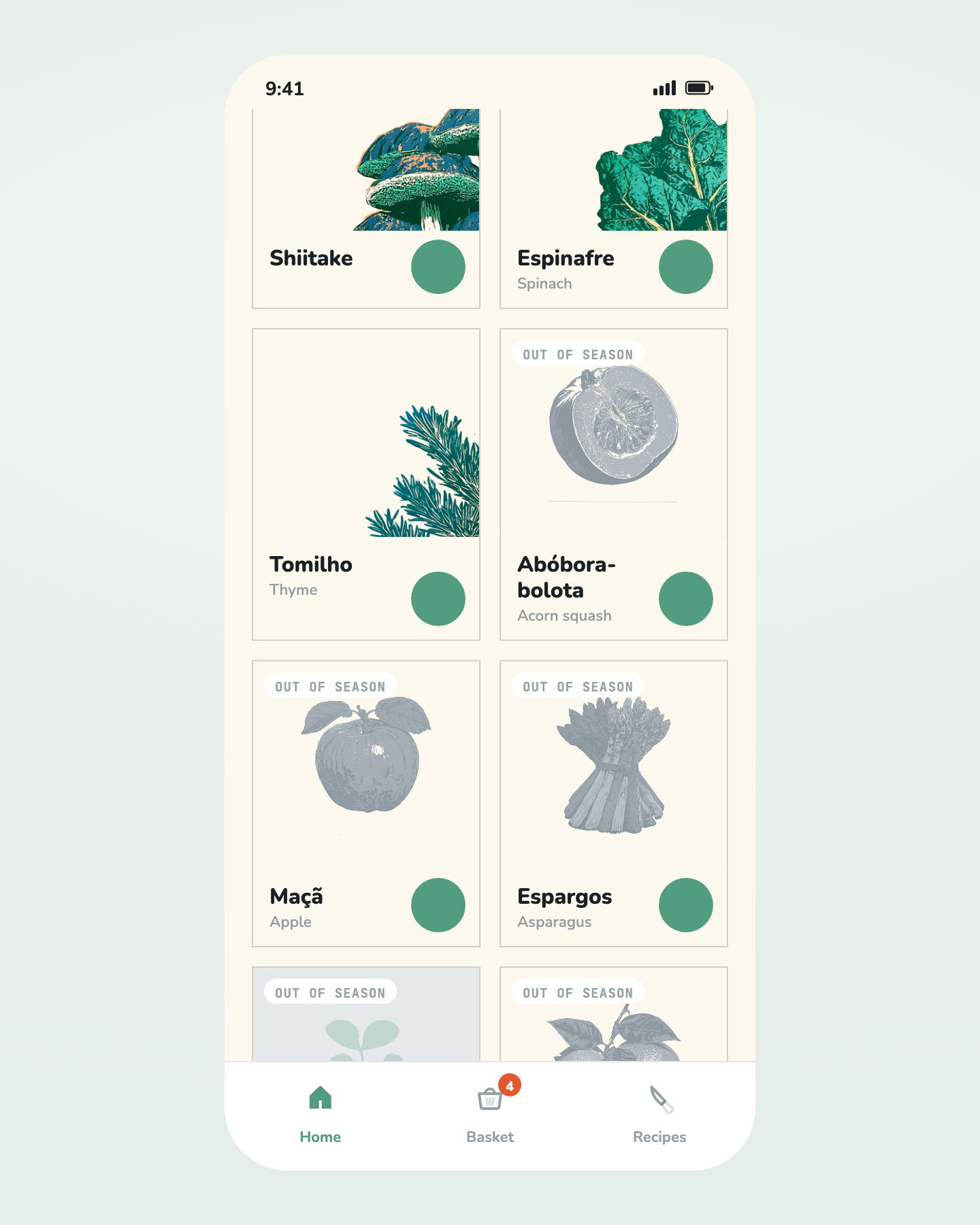
  2. Off‑season allowed, honestly flaggedYou can add a greenhouse tomato in January. It shows faded, marked out of season, and the flag becomes cooking advice, not a scold, rhyming with how languages fade as they go quiet in Atlas of Tongues.
  3. Bilingual names, local language firstStanding at a Portuguese stall and seeing "Tomate / Tomato" helps you actually talk to the vendor, tied directly to my own habit of collecting hello and thank you across languages to connect with people at markets.
  4. One confident recipe, not a menuA single answer with a quiet "Try another" keeps a two‑second market moment decisive instead of turning it into a browsing session.
  5. Europe‑firstI love wandering the markets of Portugal, Switzerland, and Italy. A temperate‑plus‑Mediterranean model solves real seasonality for the places I actually shop, instead of trying to boil the ocean on day one.
03 — Process
One designer,
directing a full stack

Concept to a live, 14‑market product in five days, one person orchestrating specialist AI tools end to end.

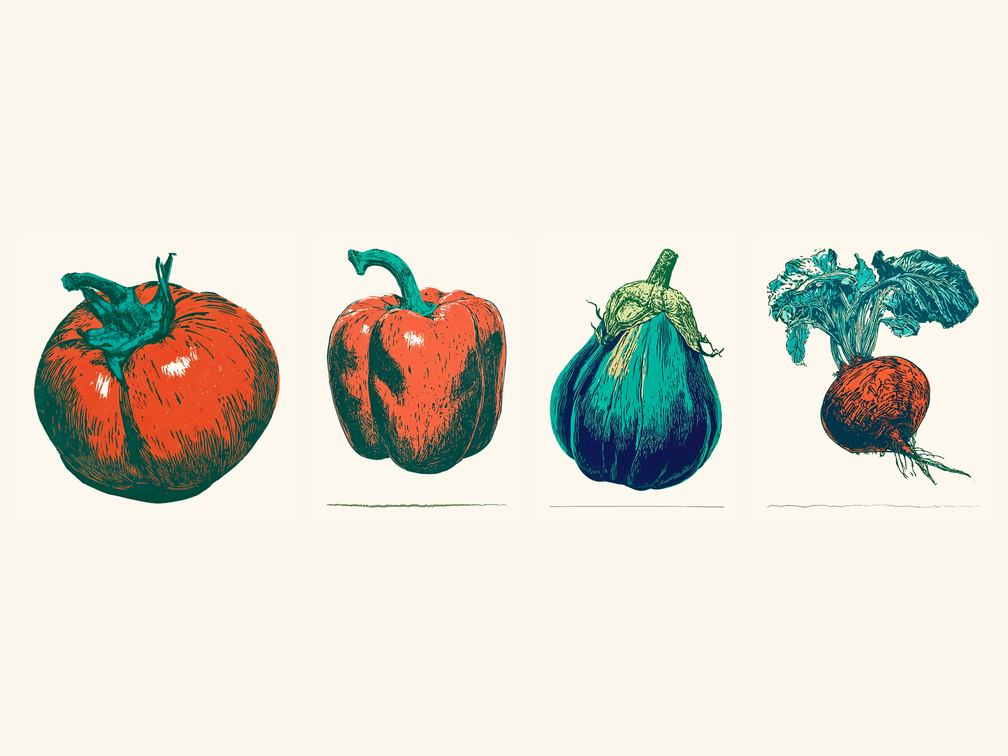
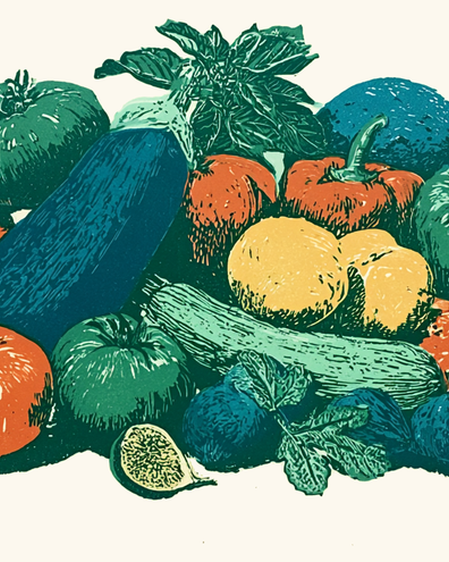
Every stage of the stack had a job and a directing hand behind it. Claude Design built the UI and the design system, a warm "sunny Sunday morning" palette with a handwritten wordmark. The illustration set was the hardest craft problem: forty‑plus vegetables that all needed to look like siblings. I locked a written style bible, generated anchor prints until one nailed a hand‑pressed linocut look at thumbnail size, then locked that as a Midjourney visual reference so the rest of the set stayed consistent. A local Python pipeline normalized every print, flattened backgrounds to the exact palette, and derived the faded off‑season versions programmatically.

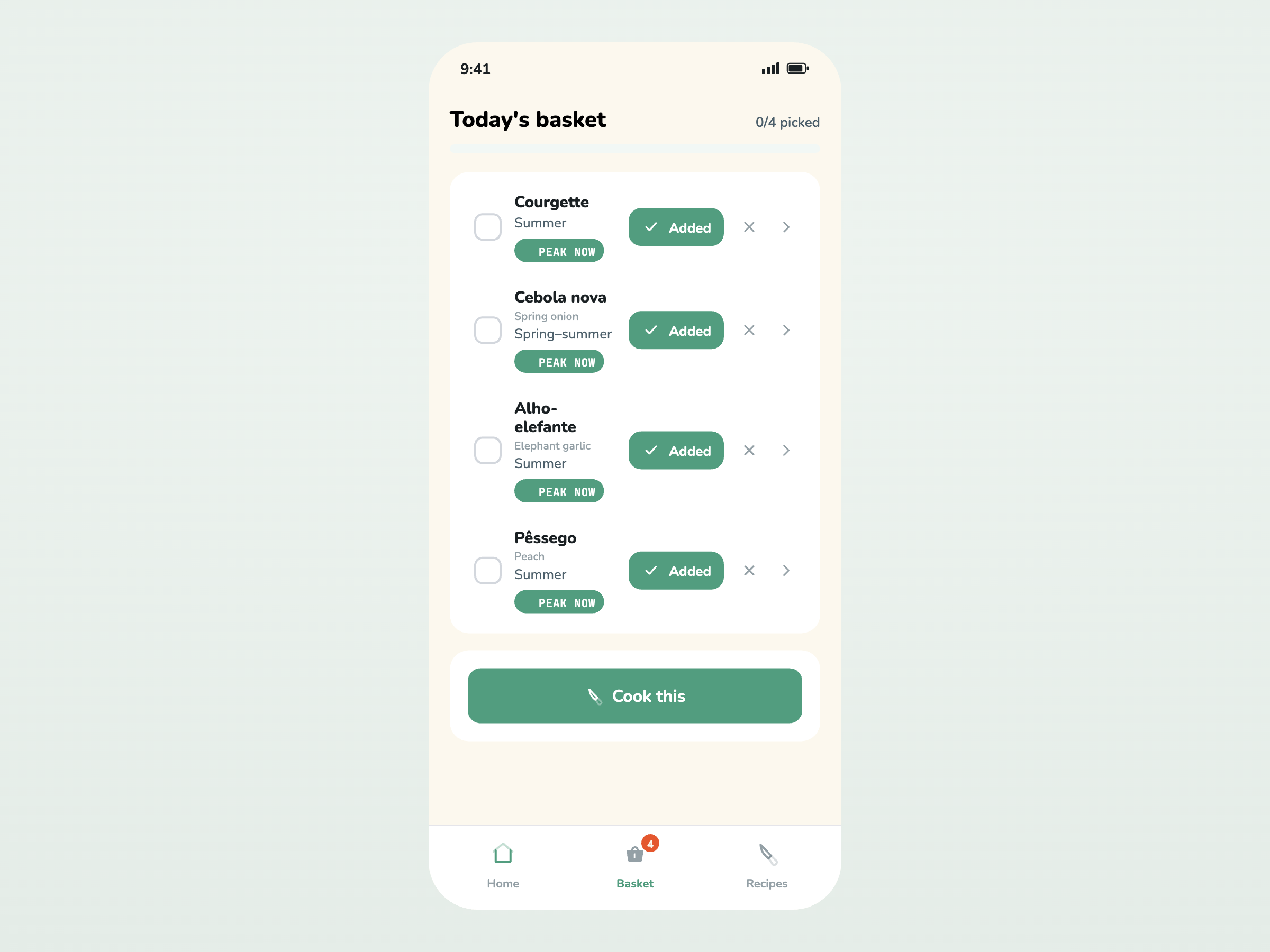
The riskiest part was the recipe engine itself, live Anthropic Sonnet 5 steered by written principles and three worked anchor recipes, not a loose prompt. I validated it in a real Lisbon shop: I named a basket, courgette, onion, garlic, and a peach, and the engine returned "Courgette and Peach, warm from a garlic refogado," with sardines suggested as the in‑season protein. It's a recipe I would never have arrived at on my own, and it sounded delicious. That was the moment the concept proved itself, not in a spec, in a shop.

01
Claude Design — UI & design system
02
Midjourney v8 — locked style reference for illustration consistency
03
Python pipeline — normalization, batch processing, off‑season derivation
04
Claude Code — build & deploy the production app
05
Cloudflare Workers — hosting, recipe API, edge geolocation, analytics
06
Sonnet 5 — live recipe engine, steered by written principles
Stack
Claude DesignMidjourney v8PythonClaude CodeCloudflare WorkersAnthropic Sonnet 5NotionCowork
04 — Outcome

A real, live product across 14 markets, not a demo.

See it yourself ↗ — lab.ryantnance.com/greendays
5
Days, concept to a live multi‑market product
14
European markets live at launch, each with its own language and climate band
83%
Catalogue items with a real hand‑pressed print, the rest are honest name‑card fallbacks
149
Produce items in the catalogue
9
Languages of produce names
6+
Fixes shipped from real tester feedback
Peak-season produce shown in full color next to out-of-season items rendered faded and flagged
In season vs. going quiet
A cluster of the hand-pressed linocut illustrations, showing the range across the produce catalogue
Hand‑pressed character at scale
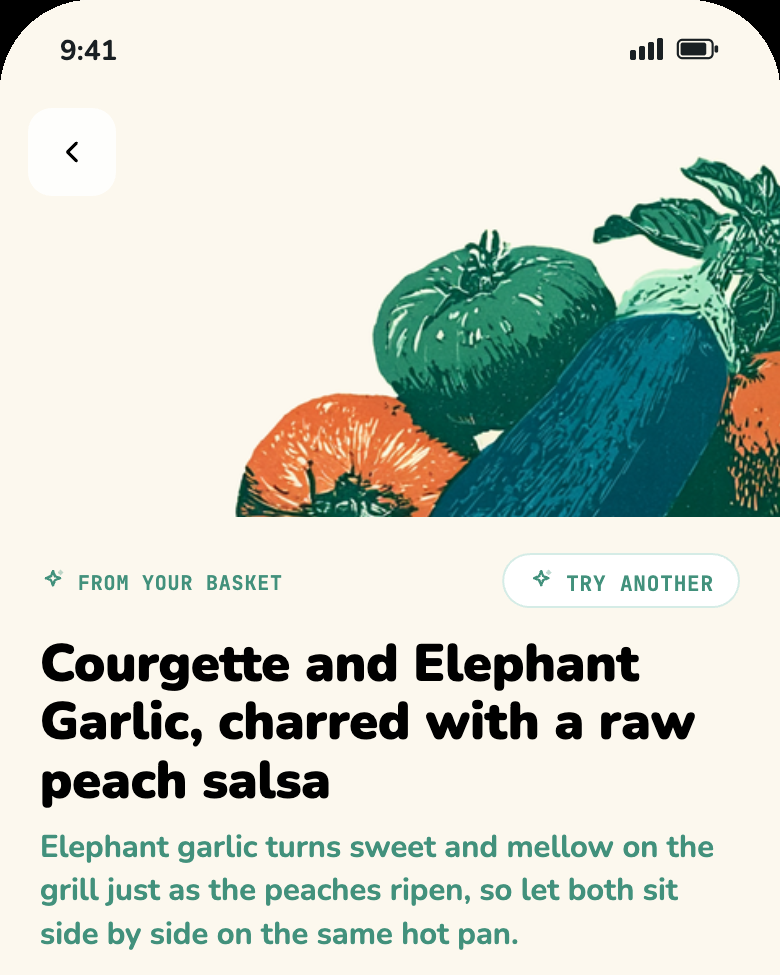
The live recipe result: Courgette and Elephant Garlic, charred with a raw peach salsa
The core loop, on a phone
What Shipped
149‑item catalogue124 illustrated items9 languages14 marketsLive recipe engine (Sonnet 5)Feedback triage system